Wednesday, July 25, 2012

Tanikella Bharani Short Films

Tanikella Bharani is a Prolific writer and versatile actor in Telugu. I am a big fan of Bharani the writer and poet. What few people know is that he is a director as well. He has directed award winning short films. First of his short films is Sira (Ink). Blue Cross and The Last Farmer followed. Another one by name Key was in the pipeline, not sure what has happened to it. Now he is busy making a feature film Mithunam with SPB and Lakshmi. Though it is not very difficult to find his short films on internet, I thought I'll put all of his works and a couple of interviews in a single blogpost so that it might help all Bharani fans.

Sira

Sira is surrealistic independent art film. You can read Sirasri's brilliant review and explanation of Sira here


Blue Cross


Blue cross won an award at Hyderabad International Film Festivals. It is based on Bharani's poem 'Chilaka Prasna'


The Last Farmer

 The Last Farmer is 1 minute short film on the sorry state of famers. It is presented by VV Vinayak. 


Grahanam

 If you haven't watched Grahanam, Please watch this National award winning movie now.


Tanikella Shankara Bharanam

I think this is a must watch. Bharani speaks candidly about his plans to start 'Kaviki Kanakabhishekam'.  Listen while he mentions about Gadwal sansthanam tradition of honouring poets. Also listen to the melodious rendering of kalidasa's Ashwadhati. If he says then it must be true, Poets are unauthorised ambassadors of Society.


Open Heart With RK 


Jovial interview. True to the name of the show its a very open hearted talk by Bharani. RK would not have enjoyed any other interview more than this. Do watch it.
రచయిత, దర్శకుడు కలిసి అందమైన కాపురం చేయకపోతే, మంచి పిల్లాడు పుట్టడు -- భరణి


For comphrehensive info on Tanikella Bharani visit :- http://www.tanikellabharani.com/tanikella.htm

Friday, July 20, 2012

My Favorite Touching Scenes

Leader -- old man scene 


 One of the very few touching scenes coming out from telugu movies. One can see shekar's honest story telling in this scene. Dialogues, background score and every other thing has come out exceedingly well to make it an outstanding scene in the entire movie. Just love to watch it any number of times. All of two minutes but leaves a deep impact. Watch out when the old man says 'Maaku nammakam ledu dora' and 'vaddhu saar bassulo potham, naluguru vuntaru' conveys so much and stirs your heart.


Swades -- money recovery scene


There are very few scenes that I like of srk. This one's brilliant. Protagonist goes on to recover money and ends up lending again. I have not seen a scene wherein State of poverty has been captured more poignantly than this on celluloid in recent times.

Gajini -- selling the cars scene


One of the keys reasons for the Gajini's success in all three languages is the character sketch of Asin's character Kalpana. This scene where she lends money for Manu's mom after selling the cars is heart warming. This makes the character even more lovable and the scene beautiful.


Athadu -- confession scene


2:24:25 - 2:33:30


One of my favorite scenes. Power of very good writing can be seen.No one can conjure the words to evoke emotions like Trivikram. He brings out right doses of emotion with his words and simply mesmerises in this pre-climax scene. Nasser and Mahesh impress with their subtle performances. Also notice Nasser's room, full of books, I like that ambiance a lot.

Khadgam -- Hero drunk scene


1:33:30 - 1:37:42

Unlike Trivikram, Krishnavamsi is known for his over the top and chaotic performances. Somehow I did connect to this scene. It did bring a lump in my throat.  Life going haywire when you get to know what you shouldn't have and the concern of people who want you is touching about this scene.

Mozhi -- Realisation Scene


9:12 - 13:15

This is one of my favorite movies. There are many beautiful scenes in this movie, right from the word go. In this scene, karthik brings his neighbour to his senses, with harsh words. Bhaskar's character who refuses to accept his son's demise will finally realise the truth after many years. A scene which stays in your heart and a must watch movie.

Virodhi -- Ravi Varma and Myna leaving the cadre for better


Its a very simple scene and I can't really pinpoint why this should be in this list. All I can say is it deserves a place in this list. While watching it did move me immensely. May be you'll understand if you see it. Also look for this beautiful song in this movie " Adivamma vesinadhii pachchani paita" . Couldn't get a link for this.

Thursday, November 17, 2011

Drama and Logic

    It is said that the makers of the classic Devadasu (ANR,1953) faced a dilemma while recording the songs. Jagame maya (జగమే మాయ బ్రతుకే మాయ) song had come out very well but they had some apprehensions about going with it in the final cut. Their logic was a drunkard speaks only gibber and words are mostly slurred. Here was a song full of wisdom, and the depressed drunk was singing it melodiously, will the audience accept.  Finally they went with it and the rest as they say it is history. As RGV quotes Alfred Hitchcock in one of his idiosyncratic reactions in his blog this is case of  “where drama begins logic ends”. Guess nobody questioned about the drunk being able to sing so flawlessly. RGV in the same answer brings up some more such instances from Shiva, Satya and Rangeela, where drama overtook logic. In another blog post, “Sculpting Emotions” he has this to say “The Director amalgamates all the arts into one wholesome experience which is intended to create an emotional impact on the audience. Watching a film should be an emotional experience. It should either make you laugh, or make you cry, or make you scared or make you feel like falling in love etc. A director’s craftsmanship is about his ability to create those moments. Crafting a scene is what for me is what purely the technical merit of a director should be judged by.

One Director who brings out the emotions so well is none other than SS Rajamouli. He is rightly called as Jakkanna for the way in which he sculpts his scenes.  In Magadheera, the emotions were brought out to the peaks in confrontation scenes between Bhairava and Sherkhan.

Sherkhan: ఎయి భైరవ,యువరాణిని వీడికిస్తానని మాటిచ్చా , దాన్ని తీసుకొచ్చి వీడి వొళ్ళో పెట్టి నా కాళ్ళకి సలాం కొట్టి పో , నిన్ను ప్రాణాలతో వదిలేస్తా
Bhairava: నేనూ నీకు మాటిస్తున్నా షేర్ఖాన్, ఆ రాజద్రోహి ని నాకప్పగించు, నిన్ను నీ సైన్యాన్ని ప్రాణాలతో వదిలేస్తా
Maansingh: శాహ్బాష్
Sherkhan: నాకు ప్రాణ బిక్ష పెడతావ, ఖుదా హు మే. నీ వొంట్లో రోషముంటే నీ కథలో నిజముంటే నా మనుషుల్ని వంద మంది ని పంపిస్తా దాని వంటి మీద చేయి పడకుండా ఆపు ఈ రాజ్యాన్ని ఆ రాణిని నీకే అప్పచెబుతా
Bhairava: వెన్ను చూపని వీరుల్ని ఏరుకుని మరీ పంపించు
Sherkhan: వాళ్ళను చూస్తేనే నువ్వు సగం చస్తావురా
Bhairava: ఎక్కువైనా పర్వాలేదు లెక్క తక్కువ కాకుండా చూసుకో
Sherkhan: వంద లో ఒక్కడు మిగిలిన నువ్వు ఒడినట్టే రా
Bhairava: ఒక్కొకన్ని  కాదు షేర్ఖాన్  వంద మంది ని ఒకేసారి రమ్మను

It is so popular that, if Lakshmi had to show action episodes of Rajamouli movies in her talk show with the director this was one of them. One testimony is the spoofs of this scene. Even in recent Dookudu, MS spoof says this ఒక్కొకన్ని  కాదు షేర్ఖాన్  వంద మంది ని ఒకేసారి రమ్మను

The point is, even if Sherkhan wanted to send 100 soldiers at a time he couldn’t have, as the pathway in front of them is so narrow, we see soldiers marching in pairs or at the max. only four would have marched at a time. So if Bhairava was serious about what he said he should have walked to the otherside or he should have waited till the 100 soldiers reached his side and started his fight. But everything is forgotten in the heat of emotion and subsequent fight sequence.Thats where Hitchcock's wisdom comes in “where drama begins logic ends”.

Now, all this looks so silly because the scene is so dramatic and  impact is so high, that if anybody had pointed out this then, would have made a fool of himself. Now that I have made one out of myself, I’ll rest my case.

http://rgvzoomin.com/sculpting-emotions/#
http://rgvzoomin.com/my-reactions-to-reactions-70/

Wednesday, November 2, 2011

ఏమంటివి ఏమంటివీ NTR dialogue in DVSK

Ever since I watched Rana say this dialogue in an interview, I wanted to get hold of the text for the same. I was searching for NTR's DVSK dialogue in Telugu but couldn't find one. Wanted to read it badly and only managed to get it in English. Now that I am smitten by the transliteration bug, thought I will transliterate it myself and here it is, enjoy.

ఆగాగు, ఆచార్య  దేవ హహహహ  హా  
ఏమంటివి  ఏమంటివీ , జాతి  నెపమున  సూత  సుతునకిందు నిలువ  అర్హత  లేదందువ? హ ఎంతమాట  ఎంతమా.ట 
ఇది  క్షాత్ర  పరీక్ష  కాని  క్షత్రియ  పరీక్షా  కాదే , కాదు  కాకూడదు,  ఇది కుల  పరీక్ష ఏ యందువ ,
ని  తండ్రి భరద్వాజుని జననమేట్టిది, అతి  జుగుప్సాకరమైన  నీ  సంభవమేట్టిది, మట్టి  కుండలో  పుట్టితివి  కదా  హహహ నిది  ఎ  కులమూ? 
ఇంత ఎలా? 
అస్మత్పితామహుడు  కురుకుల  వృద్దుడైన  ఈ శాంతనవుడు శివసముద్రల  భార్యయగు  గంగా గర్భమున  జనియించలేదా హహహ ? ఈయనదే  కులమో? హ్మ్ హ్మ్ హహాహ 
నాతో చెప్తుంటివేమయ్య ? 
మా  వంశమునకు  మూలపురుషుడైన  వశిష్టుడు  దేవ  వేశ్య  యగు    ఊర్వశీ పుత్రుడు  కాడా ? ఆతడు  పంచమ  జాతి  కన్యయైన  అరుంధతి  యందు  శక్తిని , ఆ  శక్తి   ఛండాలాంగన యందు  పరాశరుని , ఆ  పరాశరుడు  పల్లె  పడుచైన  మత్స్యగంధి యందు  మా  తాత  వ్యాసుని , ఆ  వ్యాసుడు  విధవరాండ్రైన  మా  పితామహి అంబికతో  మా  తండ్రిని , పినపితామహి అంబాలికతో  మా  పినతండ్రి  పాండురాజును, మా  ఇంటి  దాసితో  ధర్మ  నిర్మాణ  చరుడని  మీచే కీర్తించబడుతున్న  హ ఈ  విధుర దేవుని  కనలేదా? హహహాహ 
సందర్భావసరములను  బట్టి  క్షేత్ర , బీజ ప్రధాన్యములతో  సంకరమైన  మా  కురువంశము ఏనాడో   కుల  హీనమైనది .కాగా నేడు ఖు.లము  ఖు..లము అను   వియర్థ (వ్యర్థ)  వాదమెందులకు ? 

Tuesday, September 6, 2011

Buddha -- graphic novel by Osamu Tezuka

First of all a big thanks to my friend Punya for introducing me to Osamu Tezuka's graphic novel Buddha. Only books I have read on Buddha are  Herman Hesse's brilliant `Siddhartha` and Pankaj Mishra's, complex but compelling read `An end to suffering`. I have enjoyed reading both of them. But, for me none of them was as engrossing as Osamu Tezuka's `Buddha`.

Osamu Tezuka is Japanese manga artist. He is famously known as God/Father of manga, sometimes Godfather of manga. His popular works include Astroboy, Kimba the white lion, Pheonix and some such. Unfortunately most of his work is not yet translated from Japanese.


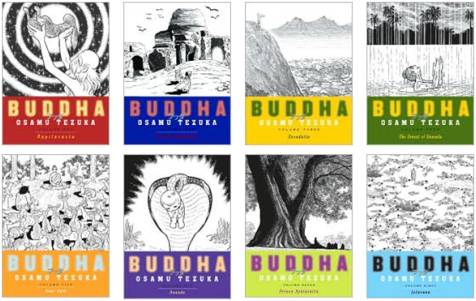
`Buddha` is a eight a eight volumed series namely 1.Kapilavastu, 2.The Four Encounters, 3.Devadatta, 4.The Forest of Uruvela, 5.Deer Park, 6.Ananda, 7.Prince Ajatasattu and 8.Jetavana. Publishers have done a commendable job by bringing each volume in unique appealing colour on the cover.


One day Punya just like that, he had never mentioned that he had such a series nor had we talked about it, gives me volume one of the series and asks me to read. I took time to finish the first one and some more time to finish the next volume. After that there was no stopping. Now I am done reading the 5 vols, rest 3 will be finishing very soon.

Buddha's life as such is very interesting. Osamu has added a couple of fictional characters and made it more dramatic. Illustrations are beautiful, characters are full of life and with free flowing pace this `Buddha` is a gradually endearing one. Great books are easy to read and difficult to get over the lingering feeling they leave on your minds. Great books also leave a void when you are finished reading them. This is exactly what  `Buddha` is doing to me with each volume. Felt happy to see Siddhartha Basu recommending this series in one of the NDTV's Just books programme, long before I started reading them. Indeed its a priced acquisition. Mind you its highly addictive.

First installment of the 3-part animation film based on the series is released earlier this year. Take a look at the trailer here.

Monday, August 29, 2011

Norwegian Wood

       There are some authors who bank on meticulous research for their stories. Then there are authors who believe imagination to be their main strength. Murakami is a kind of author who doesn't want to spoil his imagination by going to the places he wants to write about. Haruki Murakami, theatre arts major, suddenly had the inspiration to write his first novel while watching a baseball game. With Norwegian wood, Murakami tasted unprecedented success. Success which shocked him and put him into depression to some extent. To avoid the craziness of his super stardom, he had to flee Japan for a few years.

       Norwegian Wood is a love story, amidst student movement, set in late 1960's. The story has all the elements- tenderness, passion, longing and loss, to make a perfect youthful love story. Quirky humour and casual conversation between the characters about varied topics like books, music, sex and weather makes this book an interesting read.

       Norwegian wood, named against a Beatles song, listening to which the protagonist Toru Watanabe's memories take him back to his student days and his first love Naoko. Naoko is his best friend kizuki's girlfriend. Their relationship is complicated, which Toru himself finds it difficult to explain at times. To make things even more complicated, enters a vibrant girl Midori into Toru's life. Reiko and Nagasawa friends of Naoko and Toru respectively make up other interesting characters. All the characters are different and complex, yet so similar and simple. Rest of the story is about the choice Toru has to make between the two women in his life.

       One can find a lot of symbolism in Murakami's style of writing. One such, which is interesting is, after a steamy eventful night Naoko disappears from Toru's life. Later, one night, Toru sets free a firefly from a bottle, which is a gift from his roommate. As the insect flies, Toru muses, "Long after the firefly had disappeared, the trail of its light remained inside me, its pale, faint glow hovering on and on in the thick darkness behind my eyelids like a lost soul", a metaphor, which perfectly describes  Toru's longing for Naoko.

       Jay Rubin has done a commendable job of translating it into English. Independent on Sunday rightly puts it as "This book is undeniably hip".

PS :- When I was going through my old files I found this review which I had written some four years back. Norwegian Wood is the second Murakami book I had read then after Wild Sheep Chase.

Thursday, August 18, 2011

My Petty Treasure

Satya sai's wealth was still a national debate and media was speculating the actual numbers. Soon came the news of Padmanabha swamy temple's treasure. Still one chamber is to be opened. This incredible wealth could buy nations or eradicate poverty for a change. Mere seeing the pictures of Padmanabha swamy's wealth in chain mails made me go dizzy. It was so overwhelming that even I wanted to open some treasure desperately. Off I went to open the only treasure I have, some petty coins I have collected since childhood. Not very long ago I had added some coins from my brother's collection. I was not very familiar with the recent additions. So here I was looking at each coin carefully and dreaming how Padmanabha swamy temple officials would chase me to exchange the coins with the temple's  treasures and how I would refuse. Nice dream !!

Most of my collection is made of coins from 80's and 90's. Some of pre-independence era. Few international coins and one or two dating back to 1850's East India Company coins. one coin has Urdu or Arabic all over it and I cannot make head or tail out it.


One particular coin left me clueless. Looking at it gives an ancient feel to it. Date is not there, if it was there it is completely wiped out. Script on it is Devanagari but nothing is readable. Portrayals on it resembled Hindu rulers. So I expected it to be a pre-British era coin. I wanted to know more about it and I couldn't keep it out of my mind. After one or two days when I was discussing coins with my friends this came up. One friend when he saw it next day, suggested it could be a coin from Nepal. Hence my search started with Nepal coins. There were many interesting coins but nothing similar came out. I went back to my original assumption and started looking in pre-British era coins. List was too big to search from. Nothing was remotely matching and it was leading nowhere. I had to change my search strategy. Took a long look at the coin and typed what I was seeing, `person holding trishul`, `Shiva with trishul` and some other combinations. Some of the search combinations lead me back to Nepal coins. But that was not what I was looking for. I flipped the coin where it had four persons. So guessing wildly I typed `coins with Rama and his brothers`. Bingo!! It led me to what I was looking but not exactly the same. It was an Aha moment and I was amazed to see what I was looking for. I would have definitely refused to exchange the coin for world's treasures at that moment.


So what I had with me was a coin or sometimes called temple token known as Rama Tanka. I started to like this name as well. It is Rama and Lakshmana on one side which I had mistook for Shiva and Parvathi looking at what looked like a Trishul. On the other side it is the Rama darbar. I had not at all noticed the Hanuman until I looked at the pictures. Stupid of me to have missed it.

Rama Tanka is supposed to be worshipped  in Hindu households to celebrate the legend of Rama and passed on to next generations. There are genuine ancient coins and modern reproductions. Mine looks like a modern reproduction, but I am not sure. I had never seen a Rama Tanka or heard about it before. When I searched for Rama Tanka I could find a very similar coin to that of mine. I am still clueless about the exact date when this was minted and I have no idea how to figure it out also. On the whole, Searching wildly without knowing what I had with me and discovering it as Rama Tanka was a liberating experience.

Referred links:
http://www.coinquest.com/cgi-bin/cq/coins?main_coin=521&main_ct_id=54
http://psrraju1953.blogspot.com/2010/09/rama-tanka-coins-hstory.html